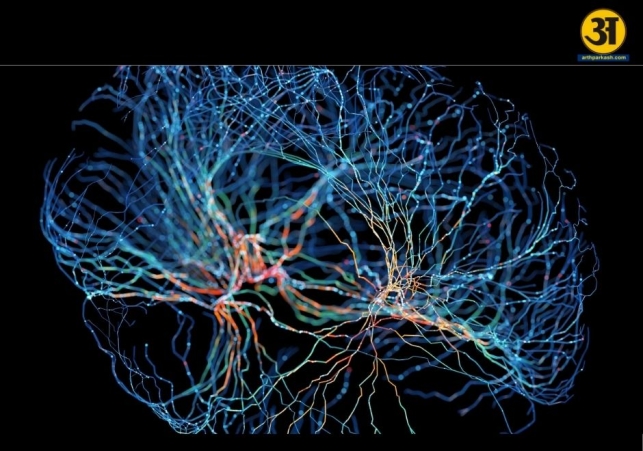
Human neurons enter the computing world
Biological computing edges closer as human neurons power next-gen chips
- By Gurmehar --
- Friday, 21 Nov, 2025
Scientists around the world are exploring a new and surprising idea—using human brain cells to power future computers. This concept is called wetware, and it is very different from the computers we know today. Instead of depending only on electronic chips and software, wetware uses living neurons grown in a lab. These neurons can think, learn, and react in ways that silicon chips cannot.
This idea is becoming more popular as artificial intelligence (AI) grows rapidly. Many researchers believe that the next step in computing may not be faster chips, but smarter biological systems that use real human neurons.
One of the biggest developments in this area came from a start-up in Melbourne called Cortical Labs. Earlier this year, they introduced a special hybrid system known as CL1. It combines stem-cell–derived brain cells with traditional silicon chips. These neurons are made from human skin or blood cells that are turned into stem cells and then grown into functioning nerve cells. According to its founder, Dr. Hon Weng Chen, these neurons can perform computing tasks with far less energy and can adapt quickly, almost the way a brain does.
Another company, FinalSpark in Switzerland, believes that one day, AI systems may run fully on biological processors instead of electronic ones. Their co-founder, Fred Jordan, argues that instead of trying to imitate the human brain through silicon chips, scientists should simply use real brain cells because they are naturally efficient and endlessly reproducible.
Wetware is becoming part of a larger computing model where three elements work together—hardware, software, and biological elements. Unlike silicon chips, the human brain is extremely powerful. It has around 86 billion neurons, all capable of connecting, adapting, and responding to the world. This makes it far more advanced in areas like intuition, emotional understanding, and awareness. Even today’s best AI systems struggle to match the human brain’s ability to sense context, understand emotions, or make creative decisions.
One area where wetware is already visible is in brain-computer interfaces (BCIs). BCIs convert signals from the brain into digital instructions. For example, a person can move a prosthetic arm simply by thinking about the movement. This technology is giving people with paralysis new ways to communicate and interact with the world. As BCIs grow more advanced, humans may soon work side-by-side with digital systems using direct neural control.
But wetware raises big questions. If we begin enhancing our brain functions through machines, what will count as “normal”? How will society treat people who use cognitive enhancements compared to those who do not? Wetware also creates new privacy risks. Thoughts, emotions, and memories may become readable through neural data, raising difficult questions about mental privacy.
Another concern is bio-cybersecurity. Hackers today target computers and networks, but in a world using wetware, they could target brain-generated data. If a system can read or influence neural activity, then misuse could allow manipulation at a level far beyond current digital threats. Governments have already started discussing “neurorights” to protect mental autonomy.
ALSO READ: A simple daily breathing test can reveal early signs of lung trouble
ALSO READ: New strategies aim to reshape global tech growth and future manufacturing
As wetware grows, many parts of society will need to change. Legal systems must decide who owns neural data. If a brain-controlled device commits an error, who is responsible—the person or the machine? Laws will also need to decide how to handle consent when neural monitoring is involved.
Education systems will also face new demands. Students of the future may need to learn not only traditional subjects but also ethical reasoning, deep critical thinking, and technological judgement. Colleges may need to train new types of professionals—neuro-engineers, bioethics experts, and hybrid computing designers.
And then there is the issue of equality. If only wealthy people can afford neural enhancement or wetware-based learning tools, society may face a new kind of divide—the neural divide. Ensuring fair access will become an important challenge.
Several companies are deeply involved in this field. Neuralink, founded by Elon Musk, is creating implantable chips that allow direct brain-to-machine communication. Their method involves surgery, which raises ethical and safety concerns.
Another company, Synchron, uses a device called a “stentrode” that is inserted through blood vessels, avoiding open-brain surgery. They are already in human trials. Precision Neuroscience, founded by former Neuralink engineers, is working on thin electrode strips to treat paralysis and assist stroke patients.
Investors also consider neurotechnology as the next big frontier. Many well-known global investors have poured money into these startups. OpenAI’s Sam Altman announced a new company called Merge Labs, which aims to explore advanced human-machine integration.
Some experts believe we are at a major turning point in human civilisation. As human minds become connected to machines and as biological neurons start doing computational work, the line between human thinking and machine computing will grow thinner. The future may involve humans whose cognitive abilities are supported or enhanced by digital systems, creating a new form of intelligence.
This innovation also forces humanity to rethink its relationship with technology. The brain is the most energy-efficient learning system ever known. Using neurons could significantly reduce energy consumption for AI, which is becoming a major global challenge as data centers expand.
However, as biological and digital systems merge, humanity must revisit the basic relationship between man, machine, science, and society. The biggest divide in the future may not be about wealth or geography, but about cognition—how people think, learn, and connect. Wetware offers exciting possibilities, but it also demands careful thought, strong safeguards, and ethical responsibility.
Related News